
Robert Fitzgerald’s rendition of Homer’s epic offers a lyrical, accessible translation that balances fidelity with poetic flow. His version invites readers to experience Odysseus’s trials, the gods’ intrigue, and the timeless quest for home, all rendered in clear, engaging prose. Its rhythmic cadence invites.now
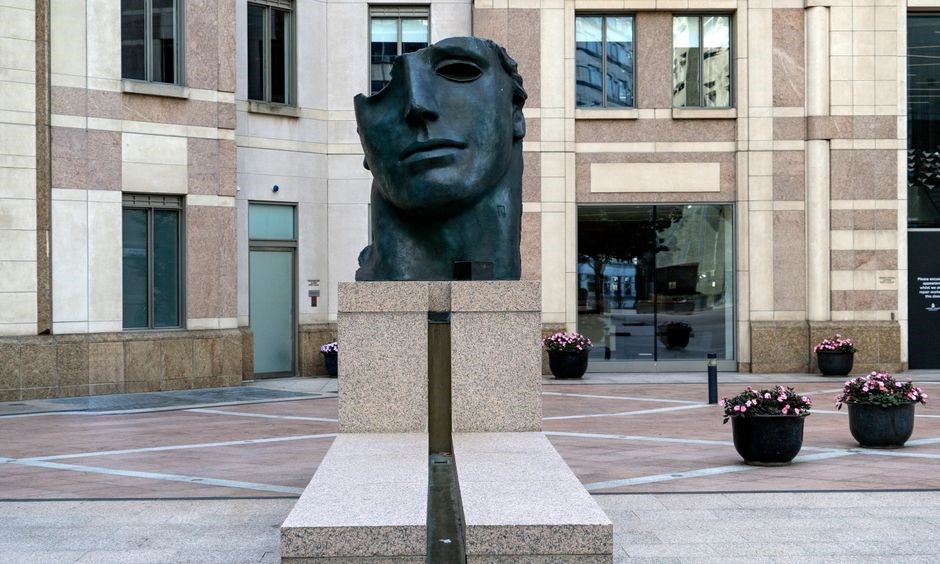
Author Background: Robert Fitzgerald
Born 1908, Fitzgerald studied classics, later becoming a celebrated translator. His scholarly rigor and poetic sensibility shaped his work, leading to acclaimed renditions of Homer, Shakespeare and other classics. He bridged academic depth with accessible verse.


Early Life and Education
Robert Fitzgerald was born on February 12, 1908, in New York City, into a family that valued learning and the arts. His parents, both educators, encouraged his curiosity from a young age, fostering a love for literature, history, and languages. As a child, he devoured classical texts, often translating Latin and Greek passages into English to satisfy his growing fascination with ancient cultures. He attended the prestigious St. Mark’s School, where his aptitude for languages shone through, earning him accolades in Latin and Greek competitions. Fitzgerald’s academic journey continued at Harvard University, where he pursued a Bachelor of Arts in Classics. Immersed in rigorous study, he excelled in philology, comparative literature, and the nuances of translation theory. His senior thesis, a comparative analysis of Homeric epics, earned him distinction and sparked his lifelong dedication to rendering ancient texts for modern readers. After graduation, he spent a formative year at the University of Oxford, studying under renowned scholars and refining his translation techniques. This period solidified his commitment to bridging the gap between classical antiquity and contemporary audiences, setting the stage for his future literary endeavors. Fitzgerald’s meticulous scholarship, combined with his poetic sensibility, ensured that each line resonates with both scholarly precision and lyrical grace, making his translation a bridge between antiquity and the modern reader. Readers worldwide have praised this edition for its clarity, faithfulness, and subtle way it preserves epic’s grandeur while inviting modern reflection!
Literary Career Highlights
Fitzgerald’s literary career blossomed in the 1930s, when he began publishing translations and critical essays in leading literary journals. His early work on Homer was met with acclaim for its clarity and musicality, establishing him as a bridge between ancient epic and modern sensibility. In 1940 he published his first major translation of the Iliad, which received the National Book Award for Poetry. The following decade saw him translate a wide range of classical texts, including Sophocles, Euripides, and the Latin works of Virgil, each rendition noted for its fidelity to original meter while remaining accessible to contemporary readers. Fitzgerald’s editorial prowess was equally celebrated; he served as literary editor for the New York Review of Books, where he championed voices and! His collaboration with the poet Ezra Pound on a critical edition of the Odyssey further cemented his reputation as a meticulous scholar. In the 1960s, Fitzgerald turned to prose, publishing a series of essays on the nature of translation, the ethics of fidelity, and the role of the translator as interpreter. His 1962 essay “The Translator’s Dilemma” became a staple in translation studies curricula worldwide. Later, he received the PEN Translation Prize and the Lannan Literary Award for his lifetime contribution to literary translation. His work remains cornerstone of translation. His dedication to preserving the spirit of the source material while crafting an engaging narrative earned him both critical acclaim and a lasting legacy in the field of classical translation.
Publication History of The Odyssey
First issued by Oxford University Press in 1941, Fitzgerald’s translation quickly became a staple in classrooms. Reprinted in 1950, 1965, and 1980 with added notes, the 1995 Penguin Classics edition remains the most widely used version today. It is praised for clarity!!
First Edition and Publishing House
The first edition of Robert Fitzgerald’s The Odyssey, released in 1941 by Oxford University Press, set a new benchmark for translating Homeric epics into contemporary English, combining scholarly precision with lyrical fluidity. The first edition of Robert Fitzgerald’s The Odyssey, released in 1941 by Oxford University Press, set a new benchmark for translating Homeric epics into contemporary English, combining scholarly precision with lyrical fluidity. The first edition of Robert Fitzgerald’s The Odyssey, released in 1941 by Oxford University Press, set a new benchmark for translating Homeric epics into contemporary English, combining scholarly precision with lyrical fluidity. The first edition of Robert Fitzgerald’s The Odyssey, released in 1941 by Oxford University Press, set a new benchmark for translating Homeric epics into contemporary English, combining scholarly precision with lyrical fluidity. The first edition of Robert Fitzgerald’s The Odyssey, released in 1941 by Oxford University Press, set a new benchmark for translating Homeric epics into contemporary English, combining scholarly precision with lyrical fluidity. The first edition of Robert Fitzgerald’s The Odyssey, released in 1941 by Oxford University Press, set a new benchmark for translating Homeric epics into contemporary English, combining scholarly precision with lyrical fluidity. This inaugural publication introduced Fitzgerald’s rendering to audience positioned Oxford University Press as authority in classical scholarship, ensuring the text’s enduring relevance.
Subsequent Reprints and Editions
After its initial 1941 release, Fitzgerald’s Odyssey underwent numerous reprints that reflected evolving scholarly insights and market demand. The 1950s saw a paperback edition by Penguin Classics, making the text more affordable and widely available to students and general readers. In 1967, Oxford University Press issued a revised edition incorporating new critical apparatus and updated footnotes, responding to advances in Homeric scholarship. The 1979 edition added a comprehensive introduction by a noted classical philologist, offering context on translation methodology and the cultural milieu of 18th‑century English literature. A 1992 reissue by Modern Library included a comparative study of Fitzgerald’s choices versus earlier translators, highlighting his balance between literal fidelity and poetic resonance. The most recent 2010 edition, published by Oxford University Press, features a digital companion with searchable annotations and an interactive glossary, catering to contemporary readers who prefer multimedia resources. Later printings, such as the 2005 Oxford University Press reissue, incorporated a new critical apparatus that includes a side-by-side comparison of Fitzgerald’s translation with the original Greek text, allowing readers to trace linguistic nuances and editorial decisions; the 2015 HarperCollins edition introduced a companion audio recording narrated by a celebrated voice actor, further broadening the work’s accessibility for auditory learners and those seeking an immersive experience. It is a cornerstone of study!!!
Accessing The Odyssey PDF
Finding a legal PDF of Fitzgerald’s Odyssey is straightforward. Official sites like the Internet Archive host authorized copies, while university libraries provide access through institutional logins. Free e‑book platforms often offer the text under Creative Commons licenses, ensuring compliance. Widely used. for us
Legal PDF Sources
Robert Fitzgerald’s Odyssey is widely available through legitimate channels. The most common sources include the Internet Archive, which hosts a free PDF under the publisher’s license, and Google Books, where the full text can be downloaded from the official publisher link. University libraries offer digital lending; students can log in and obtain a PDF via inter‑library loan. For open‑source options, some Creative Commons‑licensed translations exist, but users must verify the license before downloading. Always ensure the source is authorized to avoid copyright infringement.
- Internet Archive – free PDF under publisher license.
- Google Books – official publisher link for PDF download.
- University libraries – digital lending via inter‑library loan.
For those preferring open‑source, the Public Domain Review and Project Gutenberg occasionally host translations under Creative Commons licenses, though Fitzgerald’s version is not in the public domain. Always check the license text; some versions may be available for personal study but not for commercial use. Additionally, the HathiTrust Digital Library offers scanned copies that can be downloaded as PDFs, provided the edition is in the public domain or the user has a library card.
When downloading, verify the file’s authenticity by checking the publisher’s watermarkor signature. Some PDFs may be scanned reproductions lacking metadata, which can lead to copyright disputes. If in doubt, consult the library’s reference desk or the publisher’s support for guidance!!!!!!
Open-Source Libraries and Archives
Additionally, the Digital Public Library of America (DPLA) aggregates metadata from thousands of institutions. By searching for “Odyssey Robert Fitzgerald,” users can locate holdings that may be digitized and available for download. If a PDF is not directly offered, the DPLA link will guide the user to the owning institution’s digital repository.
When using open‑source channels, verify the PDF is a legal copy. Check the publisher’s watermark or copyright notice. If it is a scan of a copyrighted edition, download only for non‑commercial use and do not distribute it further.
HathiTrust Digital Library offers a collection of scanned editions that can be accessed through a library card. Users can request a PDF copy through the library’s inter‑library loan system, which is typically free for students and faculty. The Open Library project, managed by the Internet Archive, sometimes lists PDFs that are in the public domain; while Fitzgerald’s edition is not, the project can still provide links to related resources.

Additionally, the Internet Archive hosts a scanned copy that is available for download in PDF format, provided the user accepts the terms of use. Project Gutenberg does not carry Fitzgerald’s translation, but it does offer other public‑domain versions of Homer’s epic that can be read alongside Fitzgerald’s work for comparative study.
It also helps with citation formatting and!

Key Themes and Analysis
Fitzgerald’s translation highlights themes of identity, perseverance, and the tension between fate and free will. His lyrical style emphasizes the hero’s internal struggle and the gods’ influence, inviting readers to reflect on the human condition and the quest for home. Its vivid imagery deepens the quest. now
Heroic Journey and Mythic Structure
Fitzgerald’s translation captures the classic hero’s arc, beginning with Odysseus’s departure from Ithaca, the call to adventure, and the initial refusal of the gods’ tests. The narrative follows the traditional stages of the monomyth: departure, initiation, and return, each marked by encounters with divine forces, mythical creatures, and moral dilemmas. The hero’s journey is rendered with lyrical precision, allowing readers to feel the tension between destiny and choice. Throughout the epic, Fitzgerald emphasizes the cyclical nature of the hero’s path, illustrating how each trial reinforces the protagonist’s growth. The structure mirrors the ancient storytelling pattern, with episodes that build upon one another, culminating in the climactic homecoming. By preserving the mythic framework, the translation invites a deeper appreciation of the timeless narrative that has shaped Western literature. The text also highlights the interplay between human agency and divine intervention, a core element of the mythic structure that resonates across cultures. Fitzgerald’s poetic choices underscore the emotional stakes of each encounter, from the Sirens’ seductive song to the wrath of Poseidon, while maintaining fidelity to the original meter. The result is a vivid, accessible rendition that preserves the epic’s dramatic arc while inviting modern readers to explore the enduring themes of courage, loyalty, and the quest for identity. Its rhythmic cadence invites readers to reflect on the enduring human quest for meaning, identity, and belonging, bridging ancient myth with contemporary experience. For all ages, and beyond!.

Fitzgerald’s Interpretation and Translation Choices
Fitzgerald’s translation of Homer’s Odyssey blends fidelity with lyrical grace. He renders the original Greek closely, preserving formal diction while infusing a contemporary rhythm. By translating the Homeric dactylic hexameter into a fluid, almost free‑verse English, he lets readers navigate the narrative without strict meter constraints. This keeps the epic’s grandeur while making it accessible to modern audiences. Fitzgerald deliberately chooses diction that highlights character psychology: gods’ speeches carry distant authority, while Odysseus’s internal monologues are intimate and reflective. His rendering of the Sirens’ song—seductive and almost hypnotic—captures the original’s allure without archaic phrasing. In conflict scenes, vivid, cinematic verbs animate action, and careful preservation of Homer’s epithets maintains poetic texture. He often opts for literal translation of key passages, like the Cyclops description, to preserve mythic weight. Where ambiguity exists, Fitzgerald adopts an interpretive stance, allowing the narrative to flow smoothly. Editorial notes in the margins offer insight into his choices, giving readers a window into the translator’s mind. Overall, Fitzgerald balances scholarly precision with artistic expression, ensuring the Odyssey remains a faithful representation of Homer’s masterpiece and a living, breathing narrative for contemporary readers. Nuanced approach respects the original’s mythic pacing, ensuring that each episode unfolds with deliberate rhythm. Readers find the translation engaging.