
Pontius Pilate and the Description of Jesus: A Historical and Textual Analysis
Pilate’s governorship, marked by the trial of Jesus, presents a unique historical challenge; detailed Roman records are surprisingly scarce, fueling scholarly debate and PDF searches.
Historical Context of Pontius Pilate’s Governorship
Pontius Pilate’s tenure as prefect of Judaea (26-36 AD) occurred during a period of intense Roman imperial control and local Jewish unrest. Emperor Tiberius reigned in Rome, and Judaea existed as a volatile province within the Roman Empire. Pilate, a Roman equestrian – a member of the second-highest social class – was tasked with maintaining order and collecting taxes, a frequently difficult undertaking given the strong religious and political sentiments of the Jewish population.

The historical backdrop is crucial because it frames the events surrounding Jesus’ trial and crucifixion. Roman governance in Judaea was often heavy-handed, leading to frequent clashes with the Jewish populace. Pilate’s administration was marked by several incidents that demonstrated his lack of sensitivity towards Jewish religious customs, contributing to growing tensions. The search for “Pontius Pilate description of Jesus PDF” often reveals the importance of understanding this context, as it directly influences the narratives surrounding his actions and decisions.
Furthermore, the limited extant records from this period highlight the challenges historians face when reconstructing events. The absence of comprehensive Roman documentation necessitates reliance on fragmented sources, including the New Testament Gospels and writings from Jewish historians like Josephus, making a complete picture elusive.
Pilate’s Background and Roman Equestrian Status
Pontius Pilate belonged to the equites, the Roman equestrian order – a social class ranking just below the senatorial aristocracy. This status signified wealth and often, though not always, military experience. While not from a traditionally noble family, Pilate hailed from the Samnite clan of the Pontii, indicating some ancestral standing. His appointment as prefect of Judaea suggests imperial favor, but also potentially a lack of more experienced candidates for the role.
Being an equestrian meant Pilate likely possessed administrative and military skills, but lacked the diplomatic finesse often required for governing a sensitive province like Judaea. Sources indicate he was relatively inexperienced in governance, contributing to his miscalculations in dealing with Jewish religious sensitivities. The search for “Pontius Pilate description of Jesus PDF” often reveals discussions about how his background influenced his handling of Jesus’ case.
His equestrian status also explains the limits of his authority; he was subordinate to the legatus (governor) of Syria and operated under the direct control of the emperor. This hierarchical structure shaped his decision-making process during the trial, influencing his ultimate choice to appease the crowd and avoid potential political repercussions.
The Limited Extant Records of Pilate’s Rule
Despite Pilate’s significant role in a pivotal historical event, remarkably few primary sources directly document his governorship of Judaea. This scarcity fuels ongoing scholarly debate and intensifies the search for any relevant information, including digitized texts accessible as “Pontius Pilate description of Jesus PDF” files. The absence of comprehensive Roman administrative records is striking, challenging the assumption that Rome meticulously documented all provincial affairs.
Our understanding of Pilate primarily relies on the New Testament accounts, which, while religiously significant, are inherently theological in nature and not strictly historical reports. Outside of these texts, mentions of Pilate are brief and fragmented, appearing in the writings of Philo of Alexandria and Josephus. These references offer glimpses into his inflexibility and perceived insensitivity towards Jewish customs.

The lack of detailed documentation raises questions about the extent of Roman interest in Judaea and the importance they placed on recording events within the province. This historical void necessitates careful analysis and interpretation of the limited evidence available, making the quest for any new insights, even in PDF format, crucial.

The Trial of Jesus: A Roman Perspective
From a Roman standpoint, the trial of Jesus presented a political problem, not a theological one. Pilate, as prefect, was responsible for maintaining order and suppressing potential uprisings. Jesus’ claim to be “King of the Jews” would have been perceived as a direct challenge to Roman authority, a charge of treason demanding investigation. The search for “Pontius Pilate description of Jesus PDF” often reveals analyses of this political context.
Pilate’s reluctance to condemn Jesus, as depicted in the Gospels, suggests he recognized Jesus posed no genuine threat to Roman rule. However, pressure from Jewish leaders, fearing unrest, forced Pilate’s hand. His eventual decision to crucify Jesus was likely a pragmatic one, aimed at preventing a larger rebellion and preserving his position.
The Roman perspective emphasizes Pilate’s administrative duties and his concern for political stability. The details surrounding Jesus’ physical appearance or character were largely irrelevant; the focus was solely on the potential for sedition. This perspective is crucial when examining historical accounts and digitized texts.

Pilate’s Declaration Regarding Jesus’ Claim to Kingship
Pilate’s pivotal declaration – that Jesus claimed to be “King of the Jews” – forms the core justification for the crucifixion from a Roman legal perspective. This assertion, regardless of its veracity, immediately framed Jesus as a potential political subversive, warranting Roman attention. Searches for “Pontius Pilate description of Jesus PDF” frequently highlight the significance of this claim within the trial narrative.

Pilate’s repeated questioning, as recorded in the Gospels, aimed to ascertain the nature of Jesus’ kingship. Was it a spiritual claim, or a direct challenge to Caesar’s authority? Pilate seemingly sought to understand if Jesus intended to incite rebellion. His eventual presentation of Jesus to the crowd, proclaiming “Behold the man!” and reiterating the kingship claim, was a calculated attempt to shift responsibility.
This declaration wasn’t merely a statement of fact; it was a strategic maneuver designed to appease Jewish authorities and justify Roman action. It underscores the Roman preoccupation with maintaining control and suppressing any perceived threat to imperial power, a key element in historical analyses.
The Crucifixion as a Roman Punishment
Crucifixion, a brutal Roman practice, wasn’t reserved for the most heinous criminals, but served as a highly visible deterrent, particularly against rebellion and sedition. It was a public spectacle designed to instill fear and maintain order within the province of Judea. Online searches for “Pontius Pilate description of Jesus PDF” often reveal detailed discussions of the political context surrounding this method of execution.
Applying crucifixion to Jesus, framed as “King of the Jews,” signaled Rome’s swift and decisive response to a perceived threat to imperial authority. It wasn’t simply a judicial outcome, but a calculated demonstration of power. The Gospels portray Pilate as reluctant, yet ultimately yielding to pressure from Jewish leaders, highlighting the complex political dynamics at play.
Scholarly analyses, often found in digitized texts, emphasize that crucifixion was a common, albeit horrific, form of Roman punishment. William Overton Clough’s work, frequently cited, details the mechanics and implications of this practice within the Roman legal system, offering crucial historical context.

Analyzing Primary Sources Related to Pilate
The scarcity of direct Roman documentation concerning Pontius Pilate presents a significant challenge to historical reconstruction. While the New Testament Gospels are crucial, they are theological accounts, not impartial historical reports. Searches for “Pontius Pilate description of Jesus PDF” often lead to debates about the reliability and interpretation of these texts.
Extant references to Pilate outside the Bible are limited – notably, a dedication stone found at Caesarea Maritima and a brief mention by Philo of Alexandria; These sources offer minimal insight into his character or administration. Scholarly work, like Clough’s monograph, attempts to synthesize these fragmented pieces of evidence.
The “Pilate Papers,” a purported collection of Roman records, have been widely discredited as medieval forgeries. Analyzing these sources requires critical evaluation of authorship, context, and potential biases. Digitized historical texts and scholarly articles provide valuable tools for navigating this complex landscape, but definitive answers remain elusive.

The “Pilate Papers” and Their Authenticity
The so-called “Pilate Papers” – a collection of documents claiming to be official Roman records concerning Pilate’s governorship and the trial of Jesus – have been thoroughly debunked by modern scholarship. Initial excitement surrounding their discovery in the 20th century quickly faded as linguistic and historical analysis revealed them to be a medieval fabrication.
Searches for “Pontius Pilate description of Jesus PDF” sometimes inadvertently lead to these spurious texts, highlighting the need for critical source evaluation. The papers’ language, style, and historical inaccuracies are inconsistent with known Roman administrative practices of the 1st century AD. They reflect medieval concerns and theological agendas rather than authentic Roman documentation.
William Overton Clough’s work, while valuable in its compilation of available sources, also acknowledges the problematic nature of the “Pilate Papers.” The documents’ lack of corroborating evidence and demonstrable forgery have relegated them to the realm of pseudepigraphy, serving as a cautionary tale in historical research.
William Overton Clough’s Monograph on the Crucifixion
William Overton Clough’s 1904 monograph, “Jesus before Pilate, a monograph of the crucifixion,” remains a significant, though dated, resource for examining the available evidence surrounding the trial and crucifixion. Clough meticulously compiled reports, letters, and purported acts attributed to Pontius Pilate, attempting a comprehensive reconstruction of the events.
However, as modern scholarship has demonstrated, Clough’s reliance on sources like the “Pilate Papers” – now widely considered forgeries – significantly impacts the monograph’s reliability. Searches for “Pontius Pilate description of Jesus PDF” may lead to digitized versions of Clough’s work, but users must approach it with critical awareness.
Clough’s value lies in his exhaustive gathering of primary and secondary sources available at the time, even those later proven inauthentic. He provides a window into early 20th-century interpretations, but his conclusions regarding Pilate’s actions and the historical accuracy of the accounts require careful re-evaluation in light of contemporary research.
Challenges in Citing Primary Sources on Pilate
Citing primary sources concerning Pontius Pilate presents considerable difficulties due to the limited extant records from Roman Judea. Unlike many historical figures, Pilate’s governorship lacks a wealth of official documentation. The New Testament Gospels, while crucial, are theological accounts with specific agendas, not impartial historical reports.
Searching for a “Pontius Pilate description of Jesus PDF” often reveals reliance on secondary analyses interpreting these fragmented sources. The infamous “Pilate Papers,” once considered authentic, are now largely dismissed as forgeries, complicating source evaluation. Even seemingly reliable Roman historians offer only passing mentions of Pilate or the events surrounding Jesus’s crucifixion.
Scholars must carefully assess the provenance and biases of each source, acknowledging the gaps in the historical record. Automatic citation generators may not accurately reflect the complexities of these sources, demanding meticulous manual verification. Establishing definitive historical “facts” remains a significant challenge.
Descriptions of Jesus in Historical Accounts
Historical accounts offer remarkably little in the way of detailed physical descriptions of Jesus of Nazareth. Unlike Roman expectations for documenting individuals, especially those deemed threats, no contemporary Roman records provide a physical portrait. The search for a “Pontius Pilate description of Jesus PDF” yields primarily theological interpretations, not objective observations.
The Gospels focus on Jesus’s spiritual significance and actions, not his appearance. Any attempts to reconstruct his physical features rely heavily on artistic representations developed centuries later, influenced by cultural norms and theological interpretations. Indirect characterizations emerge through Pilate’s actions and perceptions – Jesus is presented as a figure capable of stirring unrest and challenging Roman authority.
Pilate’s recognition of Jesus’s claim to be “King of the Jews” highlights a perceived threat to Roman power, offering insight into Jesus’s character, though not his physical form. The lack of concrete details underscores the challenges in separating historical fact from religious narrative.
Lack of Detailed Physical Descriptions of Jesus
The absence of detailed physical descriptions of Jesus is a striking feature of historical accounts, particularly given Roman administrative practices. Despite Pilate’s role and the significance of the event, no surviving Roman documentation offers a physical portrait. A search for a “Pontius Pilate description of Jesus PDF” reveals a void – no official record exists detailing his appearance.
This contrasts sharply with the Roman tendency to document individuals, especially those presenting political or social challenges. The limited extant records of Pilate’s rule further exacerbate this issue, leaving a significant gap in our understanding. The Gospels, while central to Christian faith, prioritize theological meaning over physical attributes.
Consequently, any reconstruction of Jesus’s appearance remains speculative, based on later artistic interpretations and cultural biases. The lack of primary source material underscores the difficulty in establishing a historically verifiable physical description.
Indirect Characterizations of Jesus Through Pilate’s Actions
Pilate’s actions during Jesus’s trial, though not providing a direct description, offer indirect characterizations. His reluctance to condemn Jesus, coupled with attempts to shift responsibility to the crowd, suggests he perceived Jesus as posing a political, rather than a conventional, threat; Searching for a “Pontius Pilate description of Jesus PDF” yields no physical details, but illuminates Pilate’s internal conflict.
Pilate’s questioning regarding Jesus’s claim to be “King of the Jews” reveals his concern over potential rebellion against Roman authority. This highlights Jesus’s perceived power to inspire followers, even without a traditional military force. Pilate’s eventual acquiescence to the crowd’s demands, despite his doubts, demonstrates his prioritization of political stability.
Therefore, through Pilate’s behavior, we infer Jesus possessed charisma and a compelling message capable of stirring unrest, even if his physical appearance remains undocumented in surviving historical records.
The Significance of Jesus’ Claim to be “King of the Jews”
Jesus’s proclamation of being “King of the Jews” was profoundly significant to Pontius Pilate, representing a direct challenge to Roman authority. A search for “Pontius Pilate description of Jesus PDF” reveals no details about Jesus’s appearance, but emphasizes the political gravity of this claim. To Rome, any assertion of kingship within a conquered territory was an act of treason, potentially inciting rebellion.
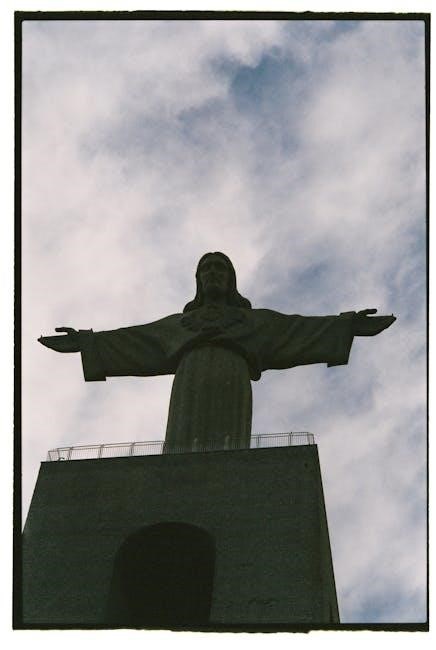
Pilate’s interrogation centered on this claim, demonstrating his immediate recognition of its subversive potential. He sought to understand the nature of Jesus’s kingdom – was it a military threat, or a spiritual one? Pilate’s concern wasn’t theological, but pragmatic; maintaining order and preventing unrest were his primary duties.
The claim’s resonance with the Jewish populace, and Pilate’s fear of repercussions from Caesar, ultimately led to Jesus’s crucifixion. Thus, the title “King of the Jews” wasn’t merely a religious statement, but a politically charged declaration with fatal consequences.
PDF Documents and Scholarly Articles on Pilate and Jesus
A search for “Pontius Pilate description of Jesus PDF” yields limited results concerning physical descriptions; instead, scholarly focus lies on historical context and textual analysis. William Overton Clough’s monograph, “Jesus before Pilate,” available in digitized formats, offers a detailed examination of Pilate’s reports and actions surrounding the crucifixion, though it lacks descriptive details of Jesus.
Numerous academic articles, often accessible through university library databases, explore Pilate’s governorship and the trial narrative. These resources emphasize the scarcity of primary sources directly from Pilate’s time, highlighting the reliance on Gospel accounts and later historical interpretations.
Digitized historical texts, while valuable, rarely contain the specific information sought – a Roman description of Jesus’s appearance. The available PDFs primarily address the political and religious implications of the event, rather than physical characteristics.
Availability of Digitized Historical Texts
Digitized resources pertaining to Pontius Pilate and the trial of Jesus are increasingly accessible, though a direct “Pontius Pilate description of Jesus PDF” remains elusive. William Overton Clough’s 19th-century monograph, “Jesus before Pilate,” is frequently available online in scanned PDF format, offering a compilation of related reports and letters, but not a physical description.
University libraries and online archives provide access to scholarly articles examining Pilate’s governorship and the historical context of the crucifixion. These often require subscriptions or institutional access, but represent significant research into the period.
While comprehensive Roman administrative records from Judea are largely absent, fragmented texts and secondary analyses are digitized and searchable. However, these sources consistently lack the detailed physical description of Jesus that many researchers seek, reinforcing the historical challenge.
Searching for “Pontius Pilate Description of Jesus PDF” Online
Online searches for a “Pontius Pilate description of Jesus PDF” consistently yield limited results directly addressing a physical portrayal of Jesus from Pilate’s perspective. The search primarily returns scholarly articles analyzing the trial, Pilate’s role, and the historical context, often requiring academic database access.
Digitized versions of William Overton Clough’s “Jesus before Pilate” appear frequently, but this work focuses on the legal proceedings and Pilate’s reports, not a descriptive account of Jesus’ appearance. Many results point to discussions about the lack of detailed descriptions in historical records.
The absence of such a document underscores the broader historical issue: Romans did not prioritize detailed biographical information about individuals like Jesus, and surviving records are fragmented. Searches often lead to theological debates rather than concrete historical evidence in PDF format.