Edgar Allan Poe’s “The Black Cat” ― A Comprehensive Guide
Explore readily available resources for accessing “The Black Cat” in PDF format, including free downloads and educational editions, while respecting copyright regulations.
Discover graded reader ebooks and audiobooks, suitable for pre-intermediate learners, in formats like epub and mobi, offering accessible learning experiences.
Understand legal considerations regarding downloads, particularly for readers outside the United States, ensuring compliance with local copyright laws and ethical access.
“The Black Cat”, a chilling tale penned by Edgar Allan Poe, delves into the macabre depths of human psychology, exploring themes of guilt, madness, and the terrifying consequences of unchecked impulses. This short story, first published in 1843, remains a cornerstone of Gothic horror literature, captivating readers with its unsettling narrative and symbolic richness.
Accessibility to this classic work is remarkably convenient in the digital age. Numerous online platforms offer free PDF downloads, allowing enthusiasts and students alike to engage with Poe’s masterful prose. However, it’s crucial to navigate these resources responsibly, respecting copyright laws and ensuring legal access, especially for international readers.
Furthermore, “The Black Cat” is frequently adapted into graded reader editions, providing learners with simplified language and supplementary materials. These versions, often available as ebooks and audiobooks, cater to various proficiency levels, making Poe’s genius accessible to a wider audience. The story’s enduring appeal lies in its ability to disturb and provoke thought, solidifying its place in literary history.
Historical Context of the Story
Published in 1843, “The Black Cat” emerged during a period of significant social and intellectual upheaval. The Romantic era was giving way to the burgeoning Gothic and psychological realism movements, influencing Poe’s exploration of the darker aspects of the human psyche. This era witnessed a growing fascination with the irrational, the supernatural, and the exploration of inner turmoil.
The increasing availability of printed materials, including affordable books and periodicals, contributed to a wider readership and a demand for sensational stories like Poe’s. The ease of accessing texts, even in PDF format today, mirrors this historical trend of democratized literature.
Poe’s own life, marked by personal tragedy and financial instability, profoundly shaped his writing. He lived in a time of rapid societal change and anxieties, which are subtly reflected in the story’s themes of guilt, addiction, and the descent into madness. Understanding this context enhances appreciation for the story’s enduring power and relevance, even in modern digital formats.
Edgar Allan Poe’s Life and Influences
Edgar Allan Poe, born in 1809, endured a life steeped in loss and hardship, profoundly impacting his literary output. Orphaned at a young age, he experienced financial struggles and personal tragedies, fueling a fascination with themes of death, grief, and psychological torment – all present in “The Black Cat,” readily available today as a PDF.
His literary influences were diverse, ranging from Gothic novelists like Ann Radcliffe to the emerging Romantic poets. Poe’s unique style, however, blended these influences with a distinctly American sensibility, focusing on psychological realism and creating a uniquely unsettling atmosphere.
Poe’s own struggles with alcoholism, mirroring the narrator’s descent in the story, likely informed his portrayal of self-destruction and the fragility of the human mind. The accessibility of his works in digital formats like PDF allows modern readers to connect with his intensely personal and often disturbing explorations of the human condition.

The Narrative and Plot
Follow the narrator’s chilling confession, easily accessible in PDF form, detailing a descent into darkness fueled by perversity and culminating in horrific acts of violence.
First-Person Narration and Unreliable Narrator
Poe’s masterful use of first-person narration in “The Black Cat,” readily available as a PDF download, immediately immerses the reader within the disturbed psyche of the unnamed narrator.
However, this perspective is profoundly unreliable; the narrator’s increasingly erratic behavior and justifications for his cruelty cast doubt upon the veracity of his account.
As readers delve into the PDF version, they encounter a character attempting to rationalize his monstrous actions, blurring the lines between reality and delusion.
The narrator’s desperate plea for understanding, often found within introductory notes of the PDF, ironically highlights his instability and the manipulative nature of his storytelling.
This unreliability compels readers to actively question the narrative, interpreting events through a critical lens and recognizing the subjective distortion of truth presented in the PDF.
Ultimately, the PDF reveals a chilling exploration of a fractured mind, where guilt, paranoia, and a penchant for the perverse warp perception and drive the narrative forward.
The Initial Relationship with Pluto
The story, easily accessible as a PDF, begins with a depiction of a tender and affectionate bond between the narrator and his black cat, Pluto.
Initially, Pluto embodies companionship and domestic tranquility, representing a period of relative stability in the narrator’s life, as detailed within the PDF text.
Poe meticulously portrays Pluto as an intelligent and gentle creature, fostering a sense of empathy in the reader before the narrative descends into darkness, a contrast evident in the PDF.
This idyllic phase is crucial, as it establishes a baseline of normalcy against which the narrator’s subsequent descent into alcoholism and violence is sharply contrasted, highlighted in the PDF.
The narrator’s detailed descriptions of Pluto’s physical attributes and personality, found throughout the PDF, emphasize the depth of their connection and the magnitude of its eventual destruction.
The early relationship serves as a poignant reminder of what the narrator loses, amplifying the horror of his actions and the psychological torment that consumes him, as revealed in the PDF.
The Descent into Alcoholism and Violence
The readily available PDF version of “The Black Cat” meticulously details the narrator’s gradual decline, fueled by excessive alcohol consumption.
This descent isn’t merely depicted as a physical affliction; the PDF emphasizes its corrosive effect on his moral character and psychological stability.
As the narrator succumbs to intoxication, a disturbing shift occurs, marked by increasing irritability, cruelty, and a growing propensity for violence, vividly portrayed in the PDF.
Initially directed towards animals, particularly Pluto, this violence escalates, foreshadowing the ultimate act of depravity, a progression clearly outlined in the PDF.
Poe skillfully uses the PDF’s narrative to illustrate how alcohol strips away the narrator’s inhibitions, unleashing a darker, more sinister side of his personality.
The PDF reveals that the narrator’s justifications for his actions become increasingly irrational and self-deceptive, highlighting the destructive power of addiction and its impact on reason.
The Murder of Pluto and its Aftermath
The “Black Cat” PDF chillingly recounts the narrator’s deliberate and gruesome act of violence against Pluto, his beloved black cat, marking a pivotal point of no return.
This horrific deed, detailed within the PDF, isn’t presented as a spontaneous outburst but as a calculated act born from a warped and alcohol-fueled rage.
Following the murder, the PDF illustrates the narrator’s initial sense of relief quickly devolves into overwhelming guilt and paranoia, setting the stage for further descent.
The subsequent fire, described in the PDF, and the appearance of a second black cat bearing a striking resemblance to Pluto, amplify his psychological torment.
Poe, through the PDF’s narrative, masterfully portrays the narrator’s escalating madness, fueled by superstition and the haunting memory of his crime.
The PDF reveals how the narrator’s attempts to rationalize his actions and suppress his guilt ultimately fail, leading to a final, desperate act of violence and confession.
Symbolism and Themes
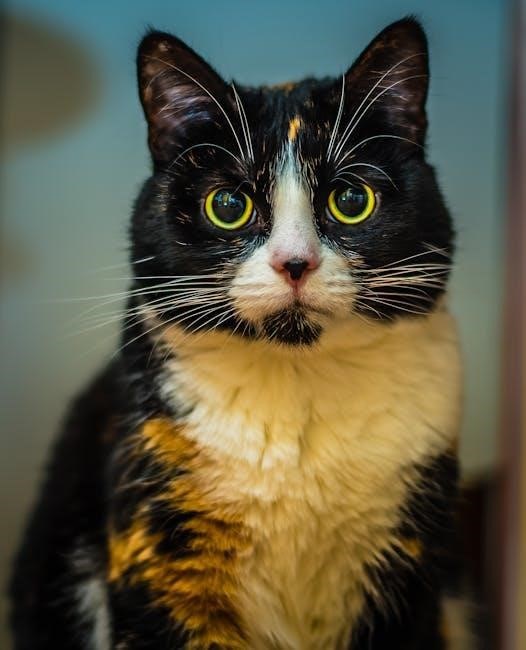
Analyze how the PDF utilizes the black cat as a potent symbol of guilt, superstition, and the narrator’s deteriorating psyche, exploring dark, psychological depths.
The Black Cat as a Symbol of Guilt and Superstition
Within the readily available PDF versions of “The Black Cat,” the feline transcends being merely a pet; it embodies the narrator’s escalating guilt and descent into madness. The black cat, steeped in centuries of superstition, represents ill omen and the supernatural, mirroring the narrator’s increasingly irrational fears.
Initially a source of affection, Pluto becomes a focal point for the narrator’s displaced rage, fueled by alcoholism. The subsequent black cat, bearing a similar marking, intensifies this symbolic weight, acting as a constant, haunting reminder of his initial crime.
Poe masterfully employs the cat to externalize the narrator’s internal torment. The animal’s presence isn’t simply coincidental; it’s a manifestation of his conscience, relentlessly pursuing him. The PDF allows close examination of how this symbolism unfolds, revealing the psychological horror at the story’s core.
The Role of Alcohol in the Narrator’s Decline
Examining the PDF of “The Black Cat” reveals alcohol as a crucial catalyst in the narrator’s moral and psychological deterioration. Initially presented as a means of coping, it quickly spirals into a destructive force, exacerbating his inherent tendencies towards cruelty and violence.
Poe meticulously details how intoxication lowers the narrator’s inhibitions, leading to the initial acts of abuse towards Pluto; The story doesn’t portray alcohol as the sole cause of his actions, but rather as an accelerant, unleashing a darkness already present within his character.
The readily available text in PDF format highlights the correlation between his increasing alcohol consumption and the escalation of his perverse impulses. It’s a chilling depiction of how substance abuse can dismantle reason and morality, ultimately culminating in horrific acts and a fractured psyche.
Themes of Guilt, Madness, and Revenge
Analyzing the PDF version of “The Black Cat” unveils potent themes of guilt, madness, and a consuming desire for revenge. The narrator’s actions, particularly the murder of Pluto, are immediately followed by a gnawing sense of guilt, manifesting as paranoia and escalating psychological instability.
Poe masterfully portrays the narrator’s descent into madness, fueled by his attempts to suppress his guilt. This internal turmoil drives him to seek retribution, not against an external force, but against himself, ultimately leading to further acts of violence and self-destruction.
The story, accessible in PDF format, demonstrates how unchecked guilt can warp perception and incite irrational behavior. The narrator’s relentless pursuit of revenge, ironically, becomes a self-inflicted torment, highlighting the destructive nature of these intertwined themes.
The Exploration of the Dark Side of Human Nature
Through the readily available PDF of “The Black Cat,” Edgar Allan Poe delves into the disturbing depths of human psychology, exposing the potential for cruelty and irrationality within us all. The story isn’t merely a tale of horror, but a chilling examination of the darker impulses that lie dormant, even in seemingly ordinary individuals.
Poe presents a narrator consumed by base instincts – alcoholism, violence, and a perverse fascination with inflicting pain. This exploration isn’t presented as an anomaly, but as a terrifying possibility inherent in the human condition, a vulnerability to succumb to our most primal urges.
The PDF allows close study of how Poe utilizes symbolism and psychological realism to portray this descent. He doesn’t offer easy answers or moral judgments, instead forcing readers to confront the unsettling truth about the capacity for evil residing within the human heart.
Literary Devices and Style
Analyze Poe’s masterful use of Gothic horror elements within the accessible PDF, noting foreshadowing, suspense, and a distinctive tone that amplifies the story’s psychological impact.
Poe’s Use of Gothic Horror Elements
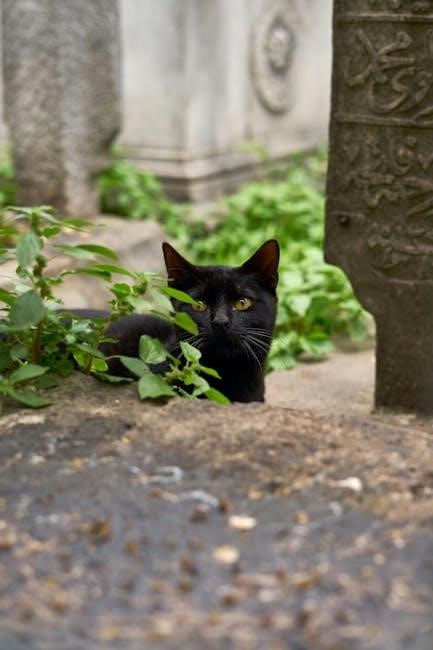
Examining the readily available PDF version of “The Black Cat” reveals Poe’s exceptional command of Gothic horror tropes. The story masterfully employs a decaying setting, mirroring the narrator’s internal deterioration, and a pervasive atmosphere of dread and suspense.
Notice the use of supernatural elements, subtly introduced to blur the lines between reality and delusion, fueling the psychological torment. The black cat itself embodies a classic Gothic symbol – a creature associated with darkness, mystery, and ill omen.
Poe skillfully utilizes heightened emotion, particularly fear and guilt, to create a visceral reading experience. The narrative’s descent into madness, vividly portrayed within the PDF, is a hallmark of the Gothic tradition.
Furthermore, the story’s exploration of the macabre and the grotesque, readily apparent in the detailed descriptions of violence, solidifies its place within the Gothic genre, offering a chilling glimpse into the darker aspects of the human psyche.
The Impact of Psychological Realism
Analyzing the PDF of “The Black Cat” demonstrates Poe’s pioneering use of psychological realism, delving into the narrator’s fractured psyche with unsettling detail. Unlike earlier Gothic tales focused on external horrors, Poe prioritizes the internal landscape of his character, charting his descent into madness.
The story’s power lies in its unflinching portrayal of the narrator’s motivations, however depraved, and his attempts to rationalize his actions. This focus on internal conflict and the complexities of human behavior was revolutionary for its time.
Through the first-person narration, readers are forced to confront the darkness within the narrator, experiencing his paranoia, guilt, and escalating violence firsthand. The PDF format allows for close reading of these subtle psychological shifts.
Poe’s exploration of the subconscious, and the destructive power of unchecked impulses, anticipates later developments in psychological literature, solidifying “The Black Cat” as a landmark achievement in the genre.
Use of Foreshadowing and Suspense
Examining the “Black Cat” PDF reveals Poe’s masterful employment of foreshadowing and suspense, building a chilling atmosphere from the story’s opening lines. The narrator’s initial sensitivity and love for animals are subtly contrasted with hints of a darker temperament, creating a sense of unease.
Poe strategically plants clues throughout the narrative, hinting at the narrator’s impending doom and the escalating violence to come. The repeated appearance of black cats, and the growing obsession with them, serves as a potent symbol of impending tragedy.
The story’s suspense is heightened by the unreliable narration; the reader is constantly questioning the narrator’s sanity and the veracity of his account. This ambiguity keeps us engaged and anxious, anticipating the inevitable descent into horror.
Through carefully crafted pacing and evocative language, Poe expertly manipulates the reader’s emotions, creating a truly unforgettable and terrifying experience, readily apparent when studying the PDF version.
Poe’s Distinctive Writing Style and Tone
Analyzing the “Black Cat” PDF showcases Edgar Allan Poe’s uniquely gothic and psychologically driven writing style. His prose is characterized by a deliberate use of evocative language, creating a dark and unsettling atmosphere that permeates the entire story.
Poe masterfully employs a first-person narrative, allowing readers direct access to the narrator’s increasingly disturbed mind. This intimate perspective, coupled with a highly descriptive and often melodramatic tone, amplifies the story’s psychological impact.
The story’s tone shifts dramatically, moving from initial calmness to mounting tension, culminating in a chilling confession. Poe’s use of repetition, particularly regarding the black cat imagery, reinforces the narrator’s obsession and descent into madness.
Through his distinctive style, Poe explores the darker aspects of human nature, leaving a lasting impression on readers, a quality readily observed when examining the text within the PDF format.
“The Black Cat” ― PDF Availability and Resources
Access “The Black Cat” PDF versions freely online, including educational resources from UFSC’s Gothic Digital Series and North American Literature collections.
Finding Free PDF Downloads of the Story
Numerous online platforms offer free PDF downloads of Edgar Allan Poe’s “The Black Cat,” catering to students, researchers, and literature enthusiasts alike. Websites specializing in classic literature, such as those providing free books of North American Literature in English, frequently host the story in various digital formats.
Exploring online search engines with keywords like “The Black Cat PDF download” will yield a plethora of results, though verifying the source’s legitimacy is crucial. Remember to prioritize reputable websites to ensure a safe and legal download experience. Always be mindful of copyright considerations when accessing digital content.
Consider utilizing digital library resources or educational platforms, which often provide legally sanctioned access to classic works like Poe’s chilling tale.
Legality and Copyright Considerations for Downloads
Navigating the digital landscape requires awareness of copyright laws, especially when downloading Edgar Allan Poe’s “The Black Cat” in PDF format. While the story is in the public domain in the United States, meaning it’s free to download and distribute, international regulations differ significantly.
Readers outside the US must verify their country’s specific copyright laws to ensure legal access. Unauthorized downloads from unofficial sources can infringe on copyright, potentially leading to legal repercussions. Prioritizing websites offering legally sanctioned downloads is paramount.
Educational institutions and libraries often provide access to digital texts under licensing agreements, offering a secure and lawful alternative. When encountering free PDFs, scrutinize the source’s credibility and terms of use.
Respecting intellectual property rights is crucial, even for works considered classics. Opting for legitimate sources safeguards both the author’s legacy and your own legal standing.
Online Resources for Studying “The Black Cat”
Numerous online platforms offer valuable resources for in-depth study of Edgar Allan Poe’s “The Black Cat,” complementing PDF downloads of the text. Gothic Digital Series from UFSC provides free educational access to the story, fostering academic exploration.
Beyond text availability, explore literary analysis websites and online forums dedicated to Poe’s works. These platforms facilitate discussions, offer critical interpretations, and provide contextual insights.
Utilizing these resources alongside a PDF copy enhances comprehension and appreciation of Poe’s masterful storytelling and psychological depth, enriching the overall learning experience.
Graded Reader Editions and Accessibility
For language learners and those seeking a simplified reading experience, graded reader editions of “The Black Cat” are readily available, often alongside standard PDF versions. These editions adapt the language and sentence structure to specific proficiency levels, typically pre-intermediate and above.
These accessible versions maintain the core narrative while easing comprehension, making Poe’s complex prose more approachable. Many include accompanying audiobooks, enhancing listening skills and pronunciation.
Downloading these editions in formats like epub or mobi allows for convenient reading on various devices, including e-readers and smartphones. This broadens access for students and enthusiasts alike.
The availability of both original PDF texts and graded readers ensures that “The Black Cat” remains accessible to a wide audience, fostering a deeper engagement with Poe’s literary genius.
Critical Reception and Legacy
“The Black Cat” continues to captivate readers and inspire adaptations in literature and film, solidifying Poe’s enduring influence, even in PDF form.
Initial Reviews and Public Response
Early reactions to “The Black Cat,” even when encountered in readily available PDF versions today, were varied, though generally acknowledged Poe’s mastery of creating a chilling atmosphere. Contemporary reviews often focused on the story’s unsettling psychological depth and its exploration of the narrator’s descent into madness.
Some critics found the tale excessively gruesome, while others praised Poe’s ability to evoke a sense of dread and suspense. The story’s popularity grew with its republication in various periodicals, and its accessibility increased with the advent of digital formats like PDF, allowing wider readership.
The narrative’s exploration of guilt, perversity, and the dark side of human nature resonated with audiences, establishing “The Black Cat” as a cornerstone of Gothic horror. The ease of access through PDF downloads has further cemented its place in popular culture and academic study, ensuring its continued relevance.
The Story’s Enduring Influence on Literature and Film
“The Black Cat”, easily found in modern PDF formats, has profoundly impacted subsequent literature and filmmaking. Its exploration of psychological horror and unreliable narration served as a blueprint for countless authors and screenwriters. The story’s themes of guilt, madness, and the supernatural continue to resonate in contemporary works.
Numerous adaptations and homages appear across various media, demonstrating its lasting appeal. From direct film adaptations to subtle influences in psychological thrillers, Poe’s tale maintains a strong presence. The accessibility of the story through PDF downloads has facilitated its study and inspired new interpretations.
Its influence extends beyond genre fiction, impacting broader literary trends. The story’s exploration of the darker aspects of the human psyche continues to captivate audiences, solidifying its status as a classic and ensuring its continued relevance in both academic and popular spheres, even via PDF distribution.
“The Black Cat” in Modern Popular Culture
Edgar Allan Poe’s “The Black Cat,” widely available as a PDF download, maintains a surprising presence in modern popular culture. References and allusions appear in music, video games, and television, often utilizing the story’s iconic imagery and themes of guilt and paranoia.
The story’s enduring appeal stems from its concise yet powerful exploration of the dark side of human nature. The ease of access through PDF formats has contributed to its continued circulation and influence on contemporary artists. It frequently serves as inspiration for horror-themed content.
Beyond direct adaptations, the narrative’s core elements – the black cat, the descent into madness, and the confession – are frequently reinterpreted and reimagined. This demonstrates the story’s adaptability and its continued relevance in a world saturated with media, readily accessible even as a free PDF.